
Across the industry, 3% to 5% of oversize FBA shipments get rejected at the door. Well-run operations keep it under 2%.
The pallet is the single biggest cause — around 35% to 40% of all rejections. Labels are second at 25% to 30%. Amazon wants a 48 × 40 inch pallet, four-way fork access, goods not hanging over the edge. A rejection you can fix in the parking lot costs a few hundred dollars and a day or two. One that needs the freight sent back can cost 1.2 to 2 times your original freight bill and take 7 to 15 working days. Peak-season appointments at busy West Coast oversize warehouses can take 5 to 10 working days, sometimes longer. What belongs in the DDP number itself: oversized DDP from China — what’s included, what’s billed later.
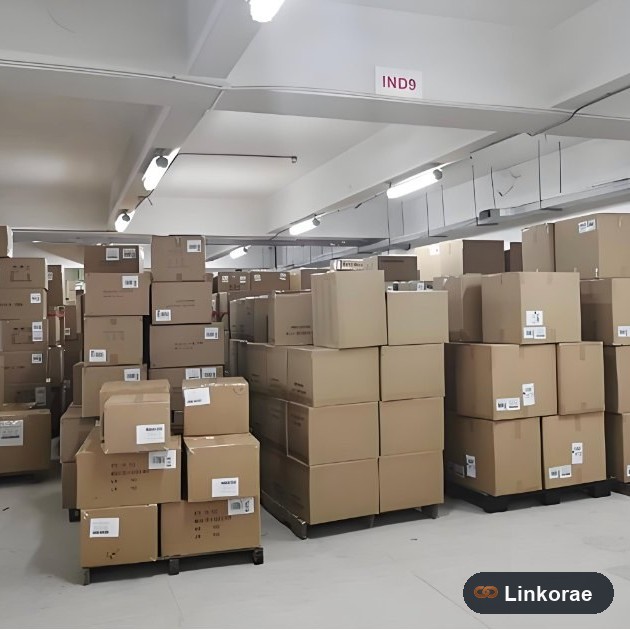
Why oversize shipments get turned away
Here’s the thing most first-time sellers get wrong: Amazon isn’t inspecting your product at the door. The receiving team has a few minutes per truck. They’re checking whether your freight can be moved safely and scanned quickly.
So the things that get you rejected are almost never about quality. Industry-wide, oversize FBA rejection rates run about 3% to 5%, and operations with tight pre-shipment checks bring that under 2%. The gap between those two numbers isn’t luck. It’s four boring things, all of which are decided in China before the container ever loads.
| Cause | Share of rejections |
|---|---|
| Pallet doesn’t meet spec | 35–40% |
| Label problems | 25–30% |
| Size or weight beyond that warehouse type | 15–20% |
| Appointment missed or cancelled | 10–15% |
| Damaged packaging | 5–10% |
Figures reflect industry-wide averages for oversize FBA inbound.
1. The pallet — 35% to 40% of all rejections
If you only fix one thing, fix this. More oversize shipments die on the pallet than on everything else combined.
Amazon wants a standard American pallet:
- 48 × 40 inches (about 122 × 102 cm)
- Four-way fork access — a forklift must get in from any side
- At least 4 inches of clearance under the deck for the fork tines
- Wood, in good condition — no cracked boards, no missing slats
Where Chinese suppliers go wrong, in the order we see it:
- Non-standard pallet size. Chinese factories commonly use 1200 × 1000 mm or 1100 × 1100 mm. Neither is 48 × 40 inches. They look close. They are not close enough.
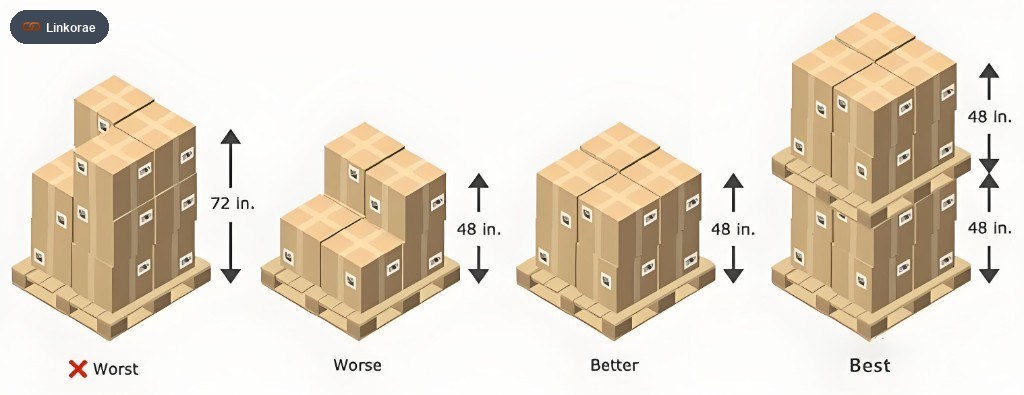
- Goods hanging over the edge. If your carton sticks out past the pallet by even 1 inch, the shipment can be refused. Overhang gets crushed in transit and jams Amazon’s conveyors.
- Pallet feet instead of cross-beams. Nine-block pallets — nine separate feet — are common in China and are not acceptable. The forklift needs a continuous beam to slide under.
- Not enough load rating. A pallet rated for 500 kg carrying 900 kg will sag or fail. The receiving team can see this and will refuse it.
- No corner protection. Heavy items shift. Corner boards and proper strapping keep the stack square.
What to do: send your supplier a photo of a correct pallet, not a written spec. Written specs get translated loosely. Photos don’t.
2. Labels — 25% to 30% of rejections
Second biggest cause, and the most avoidable of all of them.
Product barcodes (FNSKU). These must scan. The most common failure by far is stretch wrap over the label — the film distorts the barcode and the scanner can’t read it. Put labels outside the wrap, or leave a clear window.
Carton labels and the BOL. The bill of lading is the document the driver hands over. A missing or mismatched BOL label stops the unload immediately, before anyone even looks at your freight.
Weight warning labels. This one catches a lot of oversize sellers:
| Carton weight | Required label |
|---|---|
| 50 lb and over (about 23 kg) | Team Lift |
| Heavier still | Mech Lift |
These exist for warehouse worker safety and Amazon enforces them strictly. A 60 lb carton with no Team Lift sticker gets refused even when everything else is perfect.
3. Size and weight beyond the warehouse type — 15% to 20%
Amazon runs different warehouse types for different sizes, and sending an item to the wrong one means it comes straight back.
The line that matters most for oversize sellers:
- Standard oversize warehouses handle items up to roughly 8 feet (2.44 m) on the longest side and 150 lb (68 kg) per unit
- Past that you need an XL warehouse, and you need to arrange it in advance
- Sending an XL-sized item to a standard oversize warehouse without that arrangement is an automatic rejection
Practical advice: measure the item after it’s packed and on the pallet, not before. A pallet adds 4 to 6 inches of height. That’s routinely enough to push a shipment into a different tier than the one you booked for.
Amazon revises its size tiers and fee structure periodically. Confirm current thresholds on Seller Central before planning a shipment. These warehouse-type limits are separate from Amazon’s fulfillment-fee size tiers (Large Bulky / Extra-Large) — one is about which building can receive the inbound, the other is about what you pay per unit to pick and pack.
4. Appointments — 10% to 15%
Amazon warehouses run entirely on appointments. No appointment, no unload — the truck turns around with your freight still on it. How US trucking appointments work more generally: liftgate, residential, no dock.
Two ways it goes wrong. The truck misses the window — traffic, an earlier stop running long, a port delay. Or Amazon cancels, which happens when a warehouse fills up, usually at short notice.
Either way you rebook, and rebooking is where the real cost sits. How long you wait depends on where and when.
West Coast oversize warehouses (ONT8, LGB8, SMF3 and similar):
| Season | Direct container delivery | Via third-party warehouse |
|---|---|---|
| Off-peak (Mar–May, Sep–Oct) | 1–3 working days | 3–5 working days |
| Peak (Jun–Aug, Nov–Dec) | 5–10 working days | Add 2–3 days |
At the most congested West Coast warehouses during peak, direct appointments have run 10 to 15 working days.
Central and East Coast oversize warehouses run 2–4 working days off-peak and 7–12 in peak — generally 1 to 2 days slower than the West Coast.
XL warehouses are harder everywhere: 3 to 5 working days off-peak, 10 to 20 in peak. For the core XL sites, plan on locking an appointment two weeks ahead during busy periods.
Figures above reflect typical industry experience. Forwarders with contracted volume generally book 30–50% faster than spot shippers.
What this means for you: if your launch date matters, the appointment queue — not the ocean transit — is usually what puts you at risk. Build the buffer there.
5. Damaged packaging — 5% to 10%
Smallest category, but real. A wooden crate that’s come apart, badly crushed corners, product visible through a hole. Amazon treats these as a safety risk and refuses them.
Most of this traces straight back to the pallet section above. Freight that’s properly palletised, strapped and corner-protected survives the trip.
What a rejection actually costs
Two very different outcomes. Which one you get depends on whether the problem can be fixed in the parking lot.
Fixable on site — labels, wrap, minor pallet adjustment:
| Typical range | |
|---|---|
| Fix cost | $150–300 per shipment (US labour plus materials) |
| Time to fix | 0.5–1 working day |
| Time to redeliver | 1–2 working days after rebooking |
| Extra freight cost | About 10–20% of your original final-mile charge |
| Storage cost | Usually none |
Annoying, survivable, and you’re back on track inside a week.
Not fixable on site — wrong pallets throughout, item too large for that warehouse, serious damage. Now the freight goes back to a warehouse, gets unloaded, re-palletised, re-labelled, sometimes re-packed, then re-enters the appointment queue.
| Typical range | |
|---|---|
| Truck return and pickup | $100–200 per shipment |
| Warehouse inbound handling | $30–50 per cubic metre |
| Warehouse labour | $80–120 per person per hour, plus materials |
| Redelivery | About 30–50% of your original final-mile charge |
| Total elapsed time | 7–15 working days |
| Total extra cost | 1.2 to 2 times your original freight bill |
During peak season, warehouse storage fees while you wait for a new appointment push that higher.
The point worth sitting with: the difference between a $200 problem and a problem that costs more than the shipment did is usually one decision made at a factory in China. Getting the pallet right costs almost nothing. Getting it wrong costs more than the pallet ever could.
Should you send direct to FBA, or through a warehouse first?
This comes up constantly, so here’s the honest comparison.
Send direct to FBA when:
- You’re confident the pallets and labels are right — ideally because you’ve shipped with this supplier before
- Your item sits comfortably inside the limits for that warehouse type
- You have a firm appointment
- Speed matters more than flexibility
Route through a US warehouse first when:
- New supplier, and you haven’t seen their packing yet
- Your item is near a size or weight threshold
- It’s peak season and appointments are running long
- You want to split one container across several FBA warehouses
- You’d rather find a pallet problem in your own warehouse than at Amazon’s door
The second option costs more per shipment. It also removes almost all of the rejection risk, because problems surface somewhere they can be fixed for warehouse labour rates instead of emergency rates.
Our honest take: for a first shipment with a new supplier, route through a warehouse. Once you’ve seen that they pack correctly, go direct. The extra cost on shipment one is a fraction of what one non-fixable rejection costs.
What we check before your freight leaves China
We’d rather catch this in Shenzhen than in Ontario, California — because in Shenzhen it’s a repack, and in California it’s a $2,000 problem.
- Pallet size, construction, load rating, and fork clearance
- Whether anything overhangs the pallet edge
- Barcode placement and whether it scans through the wrap
- Team Lift and Mech Lift labels on heavy cartons
- Total palletised dimensions against the target warehouse type
- Whether the item needs XL handling and advance arrangement
That’s the whole argument for checking early. The cost difference between fixing a pallet in China and fixing it in the US is roughly a factor of ten.
If the piece is so large it may not even fit a standard container, start with 40HQ, flat rack, or breakbulk — pick by your cargo’s size.
Common questions
What percentage of oversize FBA shipments get rejected?
Industry-wide, about 3% to 5%. Operations with proper pre-shipment checks keep it under 2%. Most of the gap comes down to pallets and labels.
Why did Amazon reject my oversize shipment?
Statistically, the pallet — it accounts for 35% to 40% of rejections. Labels are next at 25% to 30%. Wrong pallet size, goods overhanging the edge, and missing Team Lift stickers cover the large majority of what happens at the door.
What pallet does Amazon require?
A 48 × 40 inch wooden pallet with four-way fork access, at least 4 inches of fork clearance, and adequate load rating. Chinese standard pallets are usually a different size — this catches a lot of first-time shippers.
How big can an item be before it needs an XL warehouse?
Standard oversize warehouses generally handle up to about 8 feet (2.44 m) on the longest side and 150 lb (68 kg) per unit. Past that you need an XL warehouse arranged in advance. Check Seller Central for current thresholds before you plan.
How long does it take to get an FBA appointment for oversize freight?
West Coast oversize warehouses run 1–3 working days off-peak and 5–10 in peak, occasionally 10–15 at the busiest sites. Central and East Coast are 1–2 days slower. XL warehouses run 3–5 off-peak and 10–20 in peak.
How much does a rejected shipment cost to fix?
If it’s fixable on site — labels, wrap, minor pallet work — expect $150 to $300 plus a redelivery charge, and a day or two lost. If the freight has to go back to a warehouse, expect 7 to 15 working days and total extra costs of 1.2 to 2 times your original freight bill.
Can my freight forwarder deliver directly to FBA?
Yes. Whether you should send direct or route through a warehouse first depends mostly on how confident you are in your supplier’s packing.
Shipping something large to FBA?
Send us the item dimensions, carton weight, and which warehouse you’re sending to. We’ll tell you whether it will be accepted before you book anything. Free, no obligation. Mon–Sat, 08:00–22:00 China time (GMT+8).
Rejection shares, appointment waits and repair costs are industry-wide ranges, not a Linkorae SLA. Amazon inbound pallet, Team Lift, and warehouse-type thresholds verified August 2026 against published Seller Central guidance — Amazon revises size tiers and fees periodically. Confirm current numbers before you plan. This is general information, not a quote.