
Most large cargo still fits a normal container. Check before you assume it doesn’t.
A 40HQ is about 12.03 m long, 2.35 m wide, 2.69 m high inside — and holds a single rigid piece up to roughly 11.8 × 2.13 × 2.28 m. Too tall? Open top, about 2 to 2.5× a normal container. Too wide or an odd shape? Flat rack, about 2.2 to 2.8×. Bigger than that? Breakbulk, about 3 to 5×. Which is why it’s worth asking whether the cargo can be split or redesigned first. What the DDP quote itself covers: oversized DDP from China — what’s included, what’s billed later.
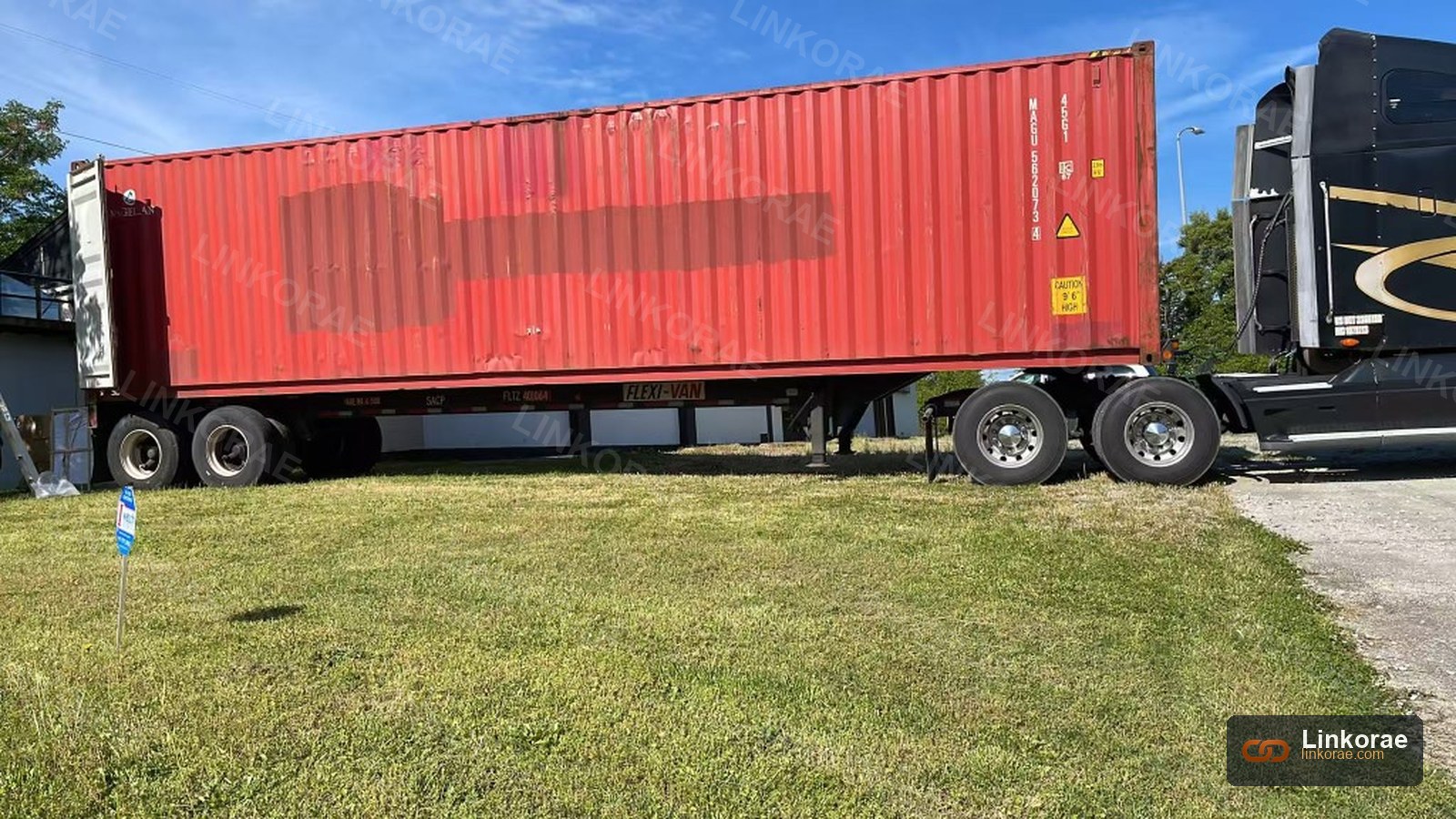
First: does it actually need a special container?
A lot of people assume large cargo needs special equipment when it doesn’t. Check the real numbers first — it can save you half your freight cost.
Here’s what fits inside a standard container:
| Container | Inside length | Inside width | Inside height |
|---|---|---|---|
| 20 ft standard | 5.90 m | 2.35 m | 2.39 m |
| 40 ft standard | 12.03 m | 2.35 m | 2.39 m |
| 40 ft high cube (40HQ) | 12.03 m | 2.35 m | 2.69 m |
The 40HQ is the workhorse for large goods. That extra 30 cm of height over a standard 40-ft is often the entire difference between a normal container and an expensive one.
Two things people forget:
- The doors are smaller than the box. The door opening is roughly 2.34 m wide, and on a 40HQ about 2.58 m high. A rigid item that fits the interior but not the doorway simply can’t get in. If your cargo can’t be tilted or angled, the doorway is your real limit, not the interior.
- You need clearance to load. Sliding a 2.34 m wide item through a 2.34 m wide door doesn’t work in practice. You need room for the forklift, the operator, and margin for error.
So the practical limit for a single rigid piece in a 40HQ is roughly 11.8 m long × 2.13 m wide × 2.28 m high. Weight-wise, a container can legally carry a great deal, but quay crane limits and US road weight rules mean the useful figure for a single piece is generally up to about 28 tonnes, with 25 tonnes as the practical planning number.
This is the threshold that matters most: stay inside it and you’re on a normal, widely available, competitively priced service. Cross it and your cost roughly doubles.
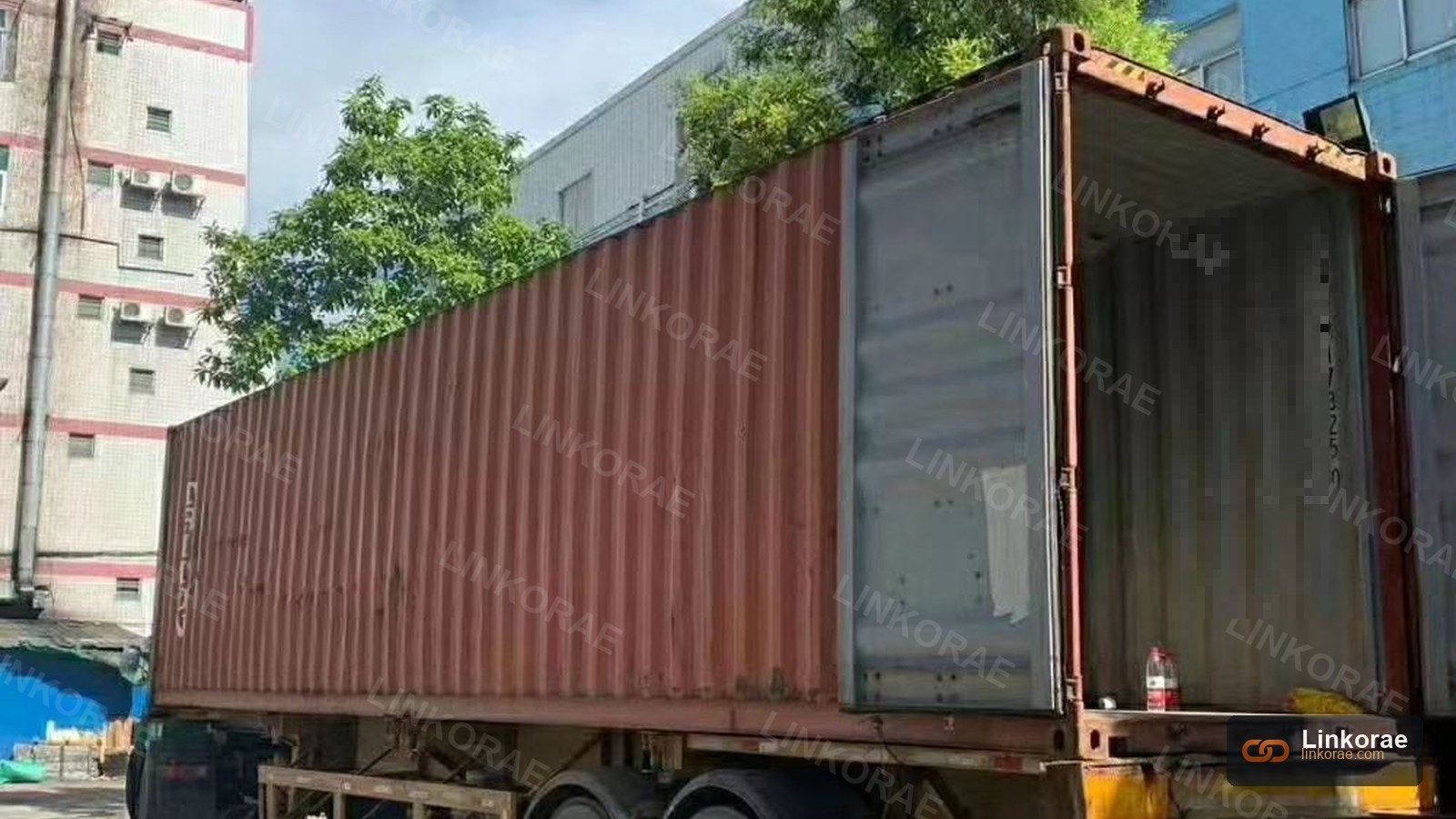
Too tall: open top
An open top container is a normal container with a removable roof — usually a tarpaulin over steel bows rather than a solid lid.
Use it when: your cargo is too tall for a 40HQ but fits the length and width, and it needs to be lowered in from above rather than pushed in from the end. Tall machinery, industrial tanks, anything with a fixed vertical structure.
Capacity: a 40-ft open top takes a single piece up to about 3.2 m high, with length and width the same as a 40HQ, and up to around 28 tonnes.
What it costs: about 2 to 2.5× a standard 40HQ for the ocean leg alone. Once port handling is added, total open-top cost typically runs 1.8 to 2.3× a normal container.
One distinction worth understanding: if your cargo sticks up above the container walls — “out of gauge” in the trade — you pay more again, and fewer vessels can take it. Cargo that fits within the walls but needs top-loading is significantly cheaper than cargo that pokes out the top. If you’re close to the line, it’s worth a design conversation.
Too wide, or an odd shape: flat rack
A flat rack is a container floor with two end walls and nothing else. No sides, no roof. Your cargo sits on the platform and gets strapped down.
Use it when: your cargo is wider than a container, or an awkward shape that won’t go through a door — boats, large vehicles, wide machinery bases, structural steel.
| Max length | Max width | Max height | Max weight | |
|---|---|---|---|---|
| 40 ft flat rack | 12.5 m | 4.5 m | 3.5 m | 30–32 t |
| 20 ft flat rack | 6.5 m | 3.5 m | 3.0 m | 20 t |
A 20-ft flat rack is meaningfully cheaper if your piece is short but wide — worth checking rather than defaulting to 40-ft.
What it costs: about 2.2 to 2.8× a standard 40HQ for the ocean leg. And here’s the part that catches people out — the wider and taller you go, the steeper it climbs. Over-width is charged in bands, and each band you cross adds another 20% to 50% on top.
This is why a small design change can save serious money. Going from 3.1 m wide to 2.9 m wide might drop you a band. That’s real money for a bracket that could have been bolted on after arrival.
Bigger than all of that: breakbulk
Breakbulk means your cargo isn’t in a container at all. It’s lifted onto the ship as an individual piece and secured in the hold or on deck.
Use it when: nothing else works. Plant equipment, large structural sections, complete production lines.
Capacity: no strict ceiling. Pieces up to around 25 m long, 6 m wide, 5 m high move this way routinely, and single pieces up to about 120 tonnes are within normal breakbulk capability. Beyond that, cargo is dismantled and shipped in sections.
What it costs: about 3 to 5× a standard container per unit of volume. Volume helps — at 500 cbm or more, unit cost typically drops to 2 to 3×, because the fixed cost of arranging the shipment gets spread over more cargo.
It’s also worth understanding that breakbulk is a planning project rather than a booking. Fewer vessels, less frequent sailings, longer lead times, and route surveys for the US leg. What happens once that piece is on a US truck: liftgate, residential, no dock.
Putting it together: a decision table
Measure your largest single piece, packed and ready to ship. Then read down.
| Your largest piece | What you need | Ocean + port vs 40HQ |
|---|---|---|
| Within 11.8 × 2.13 × 2.28 m, under ~25 t | Standard 40HQ | 1× |
| Too tall only (up to 3.2 m), length and width OK | Open top | 1.8–2.3× |
| Too wide, or awkward shape | Flat rack | 2.2–2.8× |
| Past flat-rack limits | Breakbulk | 3–5× (2–3× at high volume) |
Important: those figures cover the ocean leg and port handling only. They don’t include heavy lifting in China, extra crating, or specialised US delivery.
Once you add all of that, the door-to-door DDP difference is larger:
- Flat rack or open top DDP: about 2.5 to 3.5× a normal container DDP
- Breakbulk DDP: about 4 to 6×, varying with cargo size and how remote the delivery address is
If the destination is an Amazon FC rather than a private address, pallet and appointment rules sit on top of the container choice: oversize items to Amazon FBA from China.
When to redesign instead of paying for it
This is the part most forwarders won’t tell you, because they’d rather sell you the expensive container.
There are points where paying for special equipment stops making sense and changing the product — or splitting the shipment — becomes the better answer.
By length
- Over 12 m — won’t fit a standard container. You’re on a flat rack and your cost roughly doubles.
- Over 15 m — US road transport needs an oversize permit. Final-mile costs climb sharply. Strongly consider splitting.
By width
- Over 2.2 m — won’t fit a standard container.
- Over 3 m — most US states require an over-width permit and some routes are closed to you entirely. Delivery cost rises by 50% or more. Worth narrowing the design.
By height
- Over 2.3 m — won’t fit a standard container; you need an open top.
- Over 3.2 m — US bridge clearances become a routing problem requiring special route planning. Worth splitting to reduce height.
By weight
- Over 25 tonnes per piece — container lifting and road transport both get restricted.
- Over 30 tonnes per piece — near the ceiling for a flat rack, and US delivery needs a heavy lowboy trailer. Costs rise steeply.
The rule we use: if shipping it as one special-equipment piece costs more than 30% above shipping it as two normal containers after splitting, we’ll tell you to split it. Splitting usually also reduces damage risk and customs complications.
We say this even though the special container is the bigger invoice for us. A client who gets surprised by a four-figure permit charge in Ohio doesn’t come back for a second shipment.
What we need to give you an accurate answer
Four things, measured on the packed item, not the bare product:
- Length, width and height of your largest single piece
- Weight of that piece
- Whether it can be tilted or must stay upright
- The US delivery address
Number three matters more than people expect. An item that can be laid on its side often fits a normal container. The same item that must stay upright needs an open top and costs twice as much.
Common questions
What’s the maximum size that fits in a 40HQ container?
The inside is about 12.03 × 2.35 × 2.69 m, but the door opening is smaller and you need loading clearance. For a single rigid piece, plan on roughly 11.8 × 2.13 × 2.28 m and up to about 25 tonnes.
When do I need a flat rack instead of a standard container?
When your cargo is wider than a container, or an awkward shape that can’t go through a door. If it’s only too tall, an open top is usually the cheaper answer.
What’s the difference between open top and flat rack?
An open top is a normal container with a removable roof — it solves height, up to about 3.2 m. A flat rack has no sides at all — it solves width and odd shapes, up to about 4.5 m wide on a 40-ft. Flat racks cost more.
How much more does a flat rack cost than a normal container?
About 2.2 to 2.8 times for the ocean leg, and more again if your cargo is over-width or over-height — each band adds another 20% to 50%. Door to door on a DDP basis, expect 2.5 to 3.5 times.
Can I ship something longer than 12 metres from China to the US?
Yes, on a flat rack up to about 12.5 m, or as breakbulk beyond that. But past 15 m you’ll need US oversize road permits and delivery costs climb sharply. It’s worth checking whether the piece can be split.
What’s the heaviest single piece you can ship?
Up to about 28 tonnes in a standard container, 30 to 32 tonnes on a 40-ft flat rack, and around 120 tonnes as breakbulk. Beyond that, cargo is normally dismantled and shipped in sections.
Should I split my cargo or pay for a special container?
Our rule: if the special container costs more than about 30% above two normal containers after splitting, split it. Splitting also reduces damage and customs risk.
Not sure what your cargo needs?
Send us the length, width, height and weight of your largest packed piece, plus the US delivery address. We’ll tell you which option fits and exactly what the difference costs. Free, no obligation. Mon–Sat, 08:00–22:00 China time (GMT+8).
Interior dimensions are ISO typicals; door openings and practical loading margins vary by box. Cost multiples are industry-wide ranges for ocean plus port handling, not a quote. Figures verified August 2026. This is general information.