
US trucking delivers curbside by default. Not inside, not upstairs, not unpacked.
The driver helps unload only when a single piece is under 400 kg and under 2 m on its longest side. Above that, you supply the equipment. Once a piece exceeds 2.35 m in width or height and 1,000 kg, the shipment moves to a 53-ft trailer — which has no liftgate and no unloading service at all. A liftgate itself is capped at 400 kg. Residential streets, gated communities, construction sites and trade show floors all trigger extra charges. Most of them are avoidable if you know before booking. What belongs in the DDP number itself: oversized DDP from China — what’s included, what’s billed later.
Curbside is the default — and what that actually means
When a US trucking company says “door delivery,” it means the truck stops at the curb outside the address and the freight comes off the back. That’s it.
Door delivery does not include:
- Carrying items upstairs or into the building
- Bringing freight through a doorway
- Removing crates, wooden frames, or pallets
- Opening cartons
Every one of those is a separate service with a separate price. This is the single most common misunderstanding we see with first-time importers of large goods, and it’s where most delivery-day disputes start.
If nobody is on site with the right equipment when a 53-ft trailer arrives, the driver waits. Waiting is billed. If the wait runs long enough, the truck leaves and the shipment is redelivered — also billed. Why a final bill moves after a quote: why is my final freight bill higher than the quote?
When the driver will help, and when he won’t
There is a hard line, and it is worth memorising because it determines everything else about your delivery:
| Single piece | What happens |
|---|---|
| Under 400 kg and under 2 m longest side | Driver can help bring it down to ground level |
| Over 400 kg or over 2 m longest side | Receiver supplies a forklift or dock. Driver does not unload. |
Note the wording: can help, not guaranteed. Drivers assist within reason. A 380 kg crate with no handholds on a rainy day may still end up needing your equipment.
Also note that this is measured per piece, not per shipment. Ten pallets at 300 kg each is fine. One crate at 450 kg is not.
Practical consequence: if your factory can split a 600 kg unit into two 300 kg crates without damaging it, do that. It changes the entire delivery equation and usually costs less than the equipment you’d otherwise need to rent.
The liftgate: useful, but smaller than people think
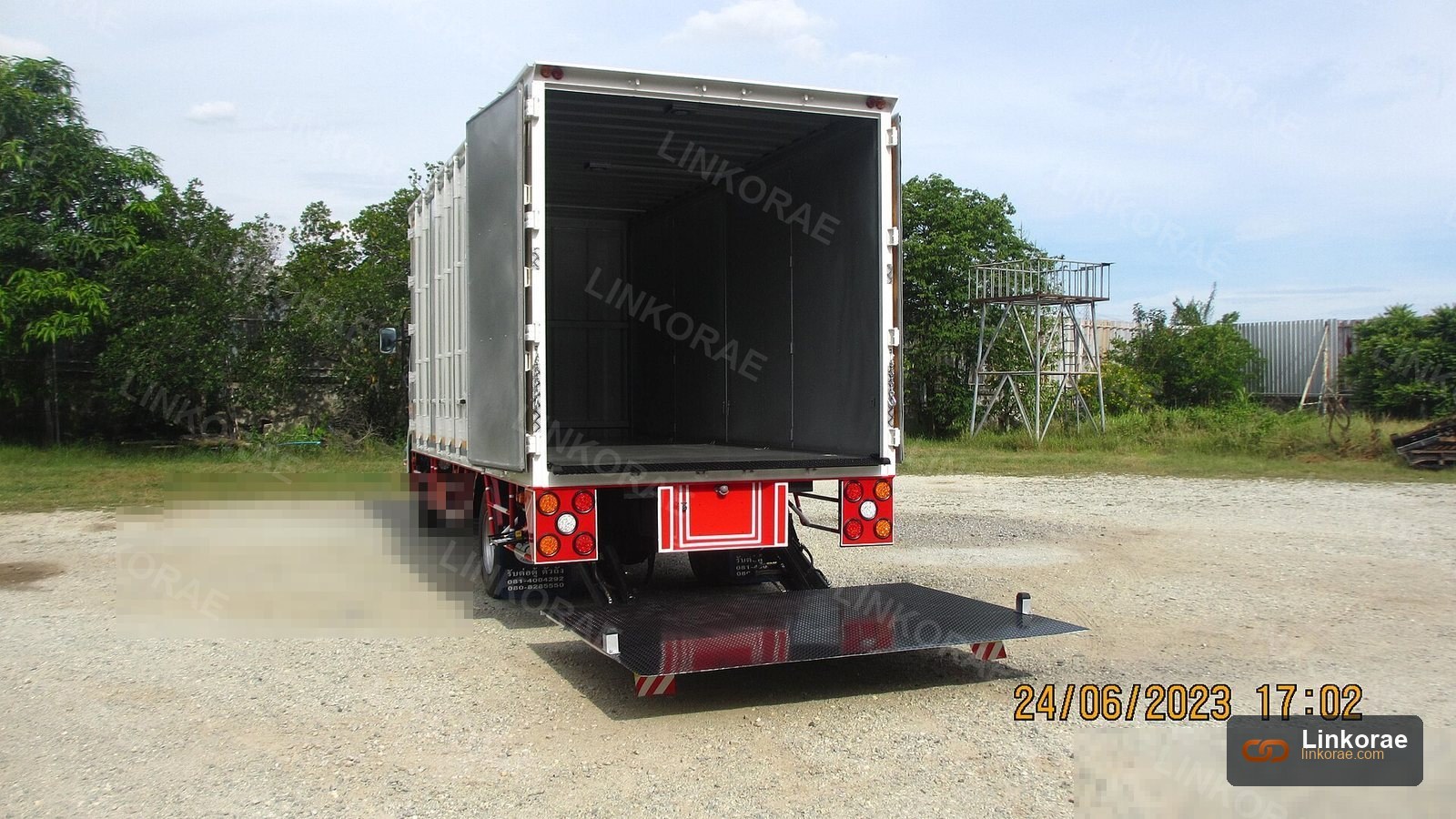
A liftgate is a hydraulic platform on the back of the truck that lowers freight to street level. It solves the problem of height, not the problem of weight.
Liftgate capacity on a 26-ft truck: 400 kg.
That number surprises most people. A liftgate does not help you receive a 1,200 kg machine. If your piece is heavier than 400 kg, the liftgate is irrelevant — you need a forklift or a dock, regardless of what truck shows up.
Liftgate service is also only available on the smaller truck. Which brings us to the most important distinction in US oversized delivery.
26-ft vs 53-ft: the decision that determines everything
US domestic trucking runs on two equipment types for this kind of freight, and which one your shipment requires changes what’s possible at the delivery address.
| 26-ft box truck | 53-ft trailer | |
|---|---|---|
| Trailer interior | 7.9 × 2.44 × 2.44 m | 15.85 × 2.51 × 2.74 m |
| Max cargo per vehicle | 4,500 kg | 19,000 kg |
| Max per single piece | 2,000 kg | Quote required above this |
| Cargo dimension limit | L ≤ 4.8 m, W ≤ 2.4 m, H ≤ 2.4 m | L ≤ 14.6 m, W ≤ 2.6 m, H ≤ 2.74 m |
| Liftgate | Yes — 400 kg limit | None |
| Unloading service | Driver assists within limits | None at all |
| Street access | Most commercial and many residential | Wide roads and proper approach only |
How your freight gets assigned:
- Palletised, under 2.35 m in width and height, each pallet 400–2,000 kg → 26-ft truck. Liftgate available.
- Any piece over 2.35 m in width or height, and over 1,000 kg → 53-ft trailer. You must have a dock or a forklift. There is no alternative.
- Longest side over 6 m → outside standard service. Requires a separate quote and route planning.
- Beyond 53-ft trailer capability → project cargo handling, quoted case by case.
The 2.35 m figure is measured after palletising, not on the bare product. A 2.30 m item on a 10 cm pallet is 2.40 m and has just changed trucks. Factor the pallet in when you check.
There’s one more trap: if your total volume is under 15 CBM but the freight still requires a 53-ft trailer, the pricing is calculated separately. You are paying for a large vehicle to carry a small load.
Receiving without a loading dock
This is the situation we spend the most time on with new clients, because it’s usually discovered too late.
If your freight requires a 53-ft trailer and you have no dock, you have four options:
- Rent a forklift for the delivery window. The forklift must be rated for your heaviest single piece. Cost scales with capacity — expect a four-figure USD charge if arranged through the carrier, less if you source it locally. You need someone certified to operate it.
- Reroute to a warehouse with a dock, then move it yourself. Adds a handling and storage step, but often cheaper than a forklift call-out. Practical if the final address is within local trucking distance.
- Request flatbed delivery. A flatbed lets a crane or boom truck lift from the side rather than pulling from the back. Useful for machinery and very heavy single pieces. Also a four-figure charge, and needs overhead clearance at the address.
- Split the shipment upstream. Go back to the factory and break the load into pieces under 400 kg. This is almost always the cheapest fix, and it’s why we ask about the delivery address before booking, not after.
Delivery appointments and the timing you don’t control
US carriers schedule oversized deliveries by appointment. The carrier contacts the receiver, agrees a window, and the truck arrives inside it.
Two things follow from this.
The clock on unloading is short. Free unloading time is graded by shipment weight:
| Shipment weight | Free unloading time |
|---|---|
| Up to 452 kg | 15 minutes |
| 453–2,266 kg | 30 minutes |
| 2,267–4,535 kg | 40 minutes |
Past that, detention is charged in 15-minute blocks. If your forklift operator is on lunch when the truck arrives, you are paying for it.
Wrong contact details are expensive. If the carrier can’t reach the receiver, the freight goes into temporary storage. Storage is free for the first 3 calendar days, then charged daily, with the rate stepping up after day 7. Redelivery is a separate charge on top.
Weekend delivery is available and costs roughly four times a standard delivery. Plan around it rather than into it.
When the truck can’t reach the address
Some addresses simply do not admit a large truck. Narrow residential streets, gated communities with tight turns, low bridges, weight-restricted roads, long unpaved driveways.
What happens then:
- Limited access charge. Applied when the carrier classifies the address as difficult. It is weight-scaled and can reach four figures on a heavy shipment.
- Inside-gate charge. Carriers deliver to the main road. If you require the driver to pass through a gate or enter an interior road, that’s a separate charge, also weight-scaled.
- Transload to a smaller vehicle. The freight is moved to a truck that can reach you, then delivered in multiple trips. Billed at cost.
These addresses are always treated as limited access and should be flagged at quoting stage: construction sites, utility facilities, government buildings, airports, mines, gas and oil fields, ports and container yards, trade show venues.
Residential addresses themselves carry no surcharge in most cases — it’s the access difficulty that costs, not the address type. A wide suburban street with a proper driveway is often easier than a cramped urban commercial block.
One thing worth knowing: limited access charges are frequently assessed by the carrier after the fact, based on GPS location. If your address is near — but not at — a flagged location, the charge may or may not appear. We pass these through as billed rather than guessing, and we tell you upfront which of these categories your address is likely to fall into.
Packing requirements that affect delivery
These are set at origin but they determine what happens at the destination:
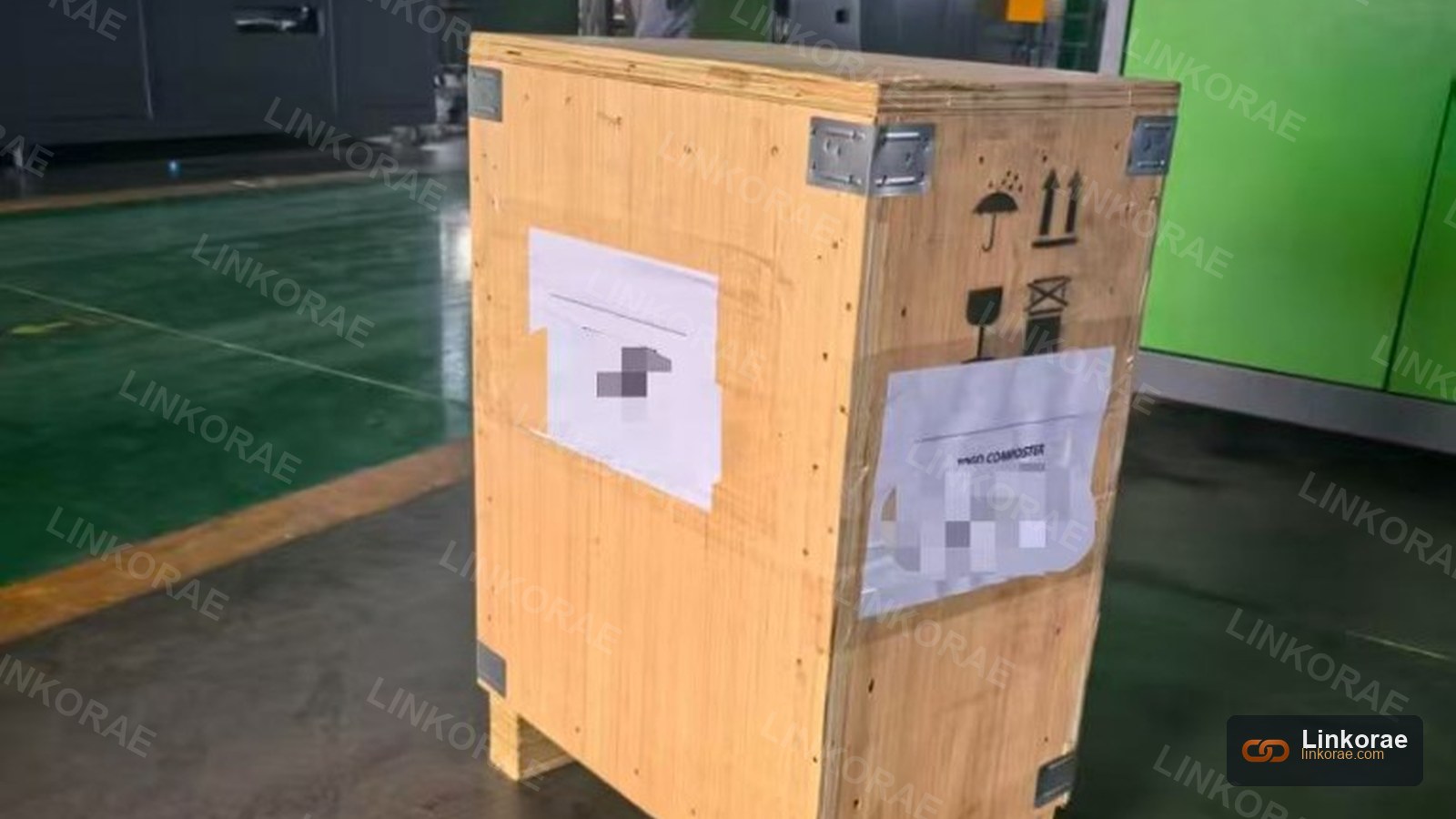
- Any piece over 50 kg, or with a longest side over 150 cm, must be crated or framed in wood. A bare carton at that weight will not survive handling.
- Pallet height must be at least 10 cm so forklift tines can get underneath. Nine-leg or single-block pallet feet are not acceptable — you need cross-beam construction.
- Wooden packaging requires fumigation. Solid wood and anything containing solid wood needs ISPM 15 treatment before export.
- Yellow and black packing tape are refused at our warehouse. They’re associated with tampering and attract inspection attention.
Where we don’t deliver
Our oversized service covers the continental 48 states only. We do not deliver to:
- PO Box addresses
- Military addresses (APO/FPO)
- ZIP 006–009 — Puerto Rico and US Virgin Islands
- ZIP 966–969 — Hawaii and Guam
- ZIP 995–999 — Alaska
If your final destination is in one of these, tell us at quoting stage and we’ll route it differently rather than discovering it at delivery.
What it costs
We publish ranges rather than fixed prices for one reason: most of these are third-party carrier charges assessed at the time of delivery, and several are billed to us after the fact. Quoting a fixed number we can’t control would be a promise we can’t keep.
| Service | Typical range (USD) | When it applies |
|---|---|---|
| Liftgate | Included in most quotes | Pieces under 400 kg |
| Forklift call-out | Four figures | No dock, heavy pieces |
| Flatbed delivery | Four figures | Side-loading required |
| Inside delivery / white glove | Four figures, quoted case by case | Beyond curbside |
| Limited access | Mid three figures to low four figures, weight-scaled | Flagged address types |
| Inside-gate access | Low to mid three figures, weight-scaled | Driver passes a gate |
| Detention | Low three figures minimum, then per 15 min | Past free unload time |
| Redelivery | Low to mid three figures | Failed first attempt |
| Temporary storage | Free 3 days, then daily; rate steps up after day 7 | Receiver unreachable |
| Weekend delivery | Low four figures | Saturday or Sunday |
| Address change after pickup | Quoted, plus a fixed change fee | Before customs release only |
All third-party charges are passed through at cost plus handling. We show you the carrier invoice.
What we do instead of surprising you: before we quote, we ask for the delivery address, the heaviest single piece, and its dimensions after palletising. Those three data points determine which of the above will apply. We’d rather tell you about a $1,000 forklift charge at quoting stage than at delivery.
Have a specific shipment?
Send three things and we’ll tell you exactly which charges will apply before you book: the delivery address, the weight of your heaviest single piece, and its dimensions after palletising. Free, no obligation. Mon–Sat, 08:00–22:00 China time (GMT+8).
Carrier equipment, free time and access charges vary by lane. Figures verified August 2026. This is general information, not a quote.