
All three types of lithium battery cargo ship from China to the US. We move built-in, packed-with-equipment, and loose batteries every week.
What changes between them is not whether you can ship — it is which lane will take it, what paperwork you need, and how it has to be packed. Get the classification wrong and the shipment is refused at handover, not at customs.
Start by working out which of the three you have.
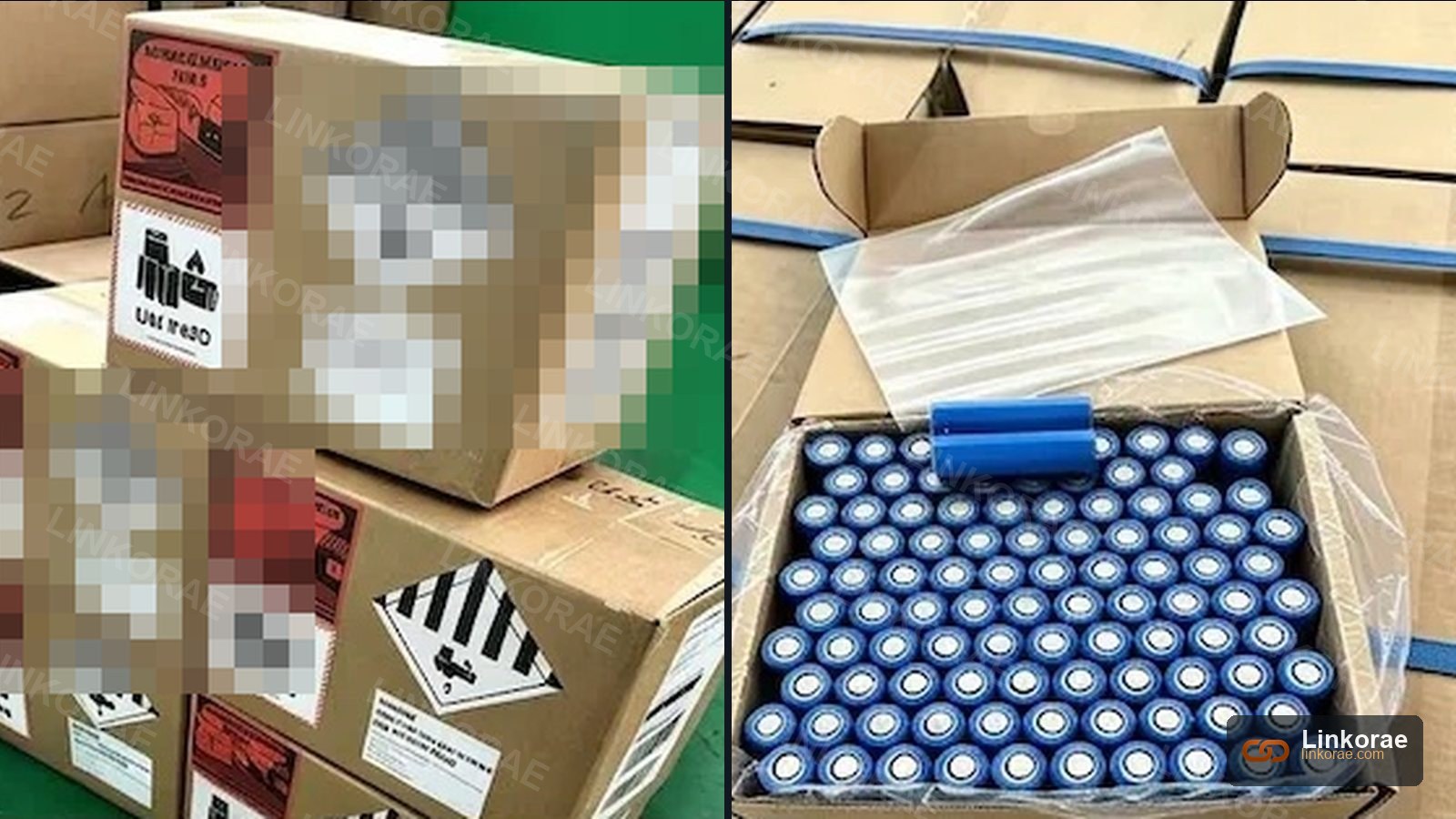
Which type do you have?
| Type | What it means | Typical products |
|---|---|---|
| 1 · Built-in | Battery is fixed inside the device and cannot be separated | Laptops, phones, Bluetooth earbuds, complete power tools |
| 2 · Packed with equipment | Battery ships in the same carton as the device, but separately packaged and not installed | Device plus spare battery kits |
| 3 · Loose / pure battery | Battery ships on its own, with no accompanying equipment | Power banks, battery packs, spare phone batteries, portable chargers |
Most misclassification happens between 1 and 2. If the customer has to insert the battery before using the product, it is type 2 — even if it arrives in the same retail box.
Type 1 — Built-in battery
The easiest of the three. Every lane accepts it.
Lanes available. International express (UPS, DHL, FedEx) · US air freight lines · US ocean lines, including Matson and standard vessels.
Documents required. MSDS (safety data sheet) · UN38.3 test report · Battery letter (shipper’s declaration).
Packing and labelling. Each cell must fall within the capacity limit of the lane you are booking. The product packaging must provide insulation protection. Standard lithium battery handling label on the outer carton.
If your factory already exports this product, they will have the UN38.3 report on file. Ask for it before you book, not after.
Type 2 — Battery packed with equipment
Express and air lines take it. Ocean needs space confirmed in advance.
Lanes available. International express · US air freight lines · Ocean lines subject to advance space confirmation.
Documents required. MSDS · UN38.3 test report · Battery letter · Non-dangerous-goods declaration.
Packing and labelling. Each battery must be individually insulated and sealed. Batteries must not be able to contact the metal parts of the device — this is the short-circuit risk the whole rule set exists to prevent. There are hard limits on the number of batteries per carton and on total capacity per carton. Over the limit, the shipment must be split across additional cartons.
The per-carton limit. Tell us the battery count and watt-hours before you pack, and we will tell you how many cartons you need.
Type 3 — Loose / pure battery
This is the restricted one. It ships, but on dedicated lanes.
Lanes available. Dedicated pure-battery air line to the US · Dedicated pure-battery ocean line to the US · International express requires a dedicated battery account and carries more restrictions.
Documents required. MSDS · UN38.3 test report · 1.2 m drop test report · Non-dangerous-goods declaration · Complete customs declaration elements.
Packing and labelling. Every battery individually insulated, with short-circuit protection. Outer carton must carry the lithium battery label and fragile / this-way-up handling labels. Strict limits on both carton weight and total capacity. Anything above specification must move as fully declared dangerous goods.
If you are shipping power banks, this is you. Budget more lead time than you would for a normal shipment — the lane runs on a schedule, not on demand.
The documents, explained
Most delays are not caused by missing goods. They are caused by a document nobody knew they needed.
MSDS — Material Safety Data Sheet. Issued by the battery manufacturer. Describes chemical composition and hazard classification. Every battery manufacturer has one; you just have to ask.
UN38.3 test report. Issued by an accredited testing laboratory. Certifies the cell has passed the UN transport safety tests — altitude, thermal, vibration, shock, short circuit, impact, overcharge, forced discharge. This is not optional and cannot be self-declared. If your supplier cannot produce it, the cell has not been tested and no compliant lane will carry it.
Battery letter / shipper’s declaration. Signed by the shipper. Confirms battery type, watt-hours, quantity and packing method.
Non-dangerous-goods declaration. Confirms the packed configuration falls within the exemption thresholds and does not require full DG handling.
1.2 m drop test report. Certifies the packed carton survives a drop from 1.2 metres without damage or short circuit. Required for loose batteries.
What actually gets battery shipments stopped
In order of how often we see it:
- Wrong classification. Declared as built-in when the battery is actually packed separately. Caught at handover.
- UN38.3 report doesn’t match the cell. A report for a different model or an earlier revision. The report has to correspond to the cell actually in the box.
- Per-carton limits exceeded. Too many batteries, or too much total capacity, in one carton.
- Insufficient insulation. Terminals not taped, batteries loose against metal.
- Missing outer labels. The carton is compliant inside and rejected outside.
None of these are customs problems. They are handover problems, and every one of them is preventable with a five-minute check before packing.
Before you pack, send us this
- Product photo and product link
- Which of the three types it is — or a photo of the packed box if you are unsure
- Cell watt-hours and quantity per carton
- Whether you have the UN38.3 report on hand
- Destination ZIP code and required delivery date
We will confirm the lane, the document set, and the carton configuration before you pack — which is the only point at which fixing it is free.
Not sure which type you have?
Send a photo of the packed product. We will tell you the type, the lane and the paperwork the same working day. Mon–Sat, 08:00–22:00 China time (GMT+8).