
Short answer: far less than you think — unless you did three specific things before the truck arrived.
Most importers assume that if cargo is damaged in transit, the freight company pays for it. That is not how international shipping works. Default liability limits are set by international convention, and they are low enough to surprise almost everyone the first time they file a claim. What sits inside an oversized DDP number itself: what’s included, what’s billed later.
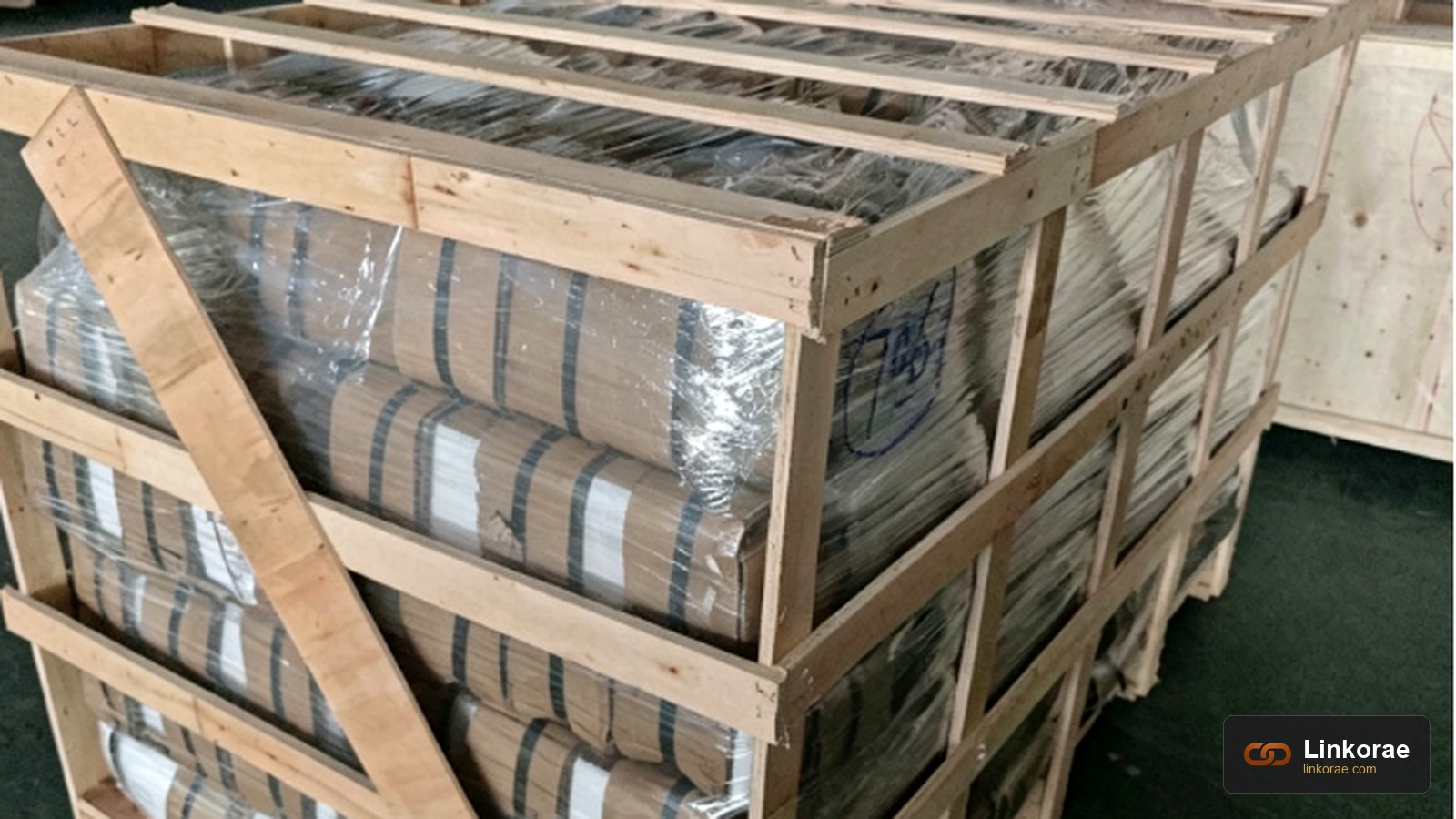
The number nobody tells you: $500 per package
For ocean freight into the United States, liability is governed by COGSA — the Carriage of Goods by Sea Act. Its default limit is $500 per package.
Not $500 per claim. Not $500 per container. Per package.
If your crate contains a $6,000 machine and it arrives crushed, the carrier’s baseline legal exposure is $500. The remaining $5,500 is yours unless you took additional steps.
Air freight works the same way under a different convention, with limits calculated by weight rather than by package. Either way, the principle is identical: the default limit is tied to the shipment’s physical characteristics, not to what the goods are worth.
This is not a loophole. It is written into the law that makes international shipping economically possible — carriers cannot price freight on the assumption that every box might contain something priceless.
What our standard coverage looks like
Our default limits are set per cubic meter rather than per package, which generally works in favor of oversized shipments:
| Stage | Situation | Standard limit |
|---|---|---|
| Before US warehouse release | Customs hold not caused by the goods themselves; goods lost and unrecoverable | Declared value, capped at approx. US$560 per CBM |
| After US warehouse release | Full carton loss, documented at delivery | Declared value, capped at approx. US$280 per CBM |
| Transit delay | Shipment exceeds the agreed transit window | Per the service level booked |
Freight charges are not refunded as part of a cargo claim.
Why this matters for oversized freight: a 2 CBM crate carries a limit of roughly $1,120 under our standard terms, against $500 under the COGSA default. For large, low-density cargo, per-CBM limits are usually more favorable than per-package limits.
That said — $1,120 still doesn’t replace a $6,000 machine. Which brings us to the part that actually protects you.
The only real answer: cargo insurance
Liability limits are not insurance. They are a cap on what a carrier owes when something goes wrong under its watch. Cargo insurance is a separate product that covers the value of your goods.
What it changes: instead of recovering a formula-based limit, you recover your declared value, subject to policy terms.
What it costs: it depends on cargo value, packaging quality, commodity type, and route. Oversized and high-value machinery prices differently from general cargo. We quote it per shipment rather than applying a flat rate.
What it doesn’t cover: most policies exclude damage caused by inadequate packaging, and standard coverage for fragile goods typically covers loss but not breakage. If a crate was built wrong at origin, insurance is not the fix — correct packing is. How packing shows up before the vessel: the cheapest supplier and the best supplier are rarely the same company.
When to arrange it: before the cargo ships. Not after it lands.
For anything above roughly $5,000 in declared value, the insurance premium is a small fraction of what you stand to lose. This is the single highest-return decision in the whole process, and most first-time importers skip it.
The three minutes that decide your claim
Here is where most claims are actually lost — not in the policy, but at the moment of delivery.
If you sign a clean POD, you have accepted the goods as delivered in good condition. A signature with no exception noted is, in practice, the end of the conversation. It is very difficult to prove after the fact that damage happened before delivery rather than after. What “delivery” itself includes: who unloads — the driver or you.
So before you sign:
- Inspect the crate before the driver leaves. Walk around it. Look at corners, edges, and the underside of the pallet. Signs of impact, water staining, or crushing are usually visible from outside.
- Photograph anything that looks wrong. Photos of the damaged area, and a photo showing the cargo together with the delivery driver on site. The second one matters more than people expect — it establishes that the condition existed at delivery, with a witness present.
- Write the exception on the delivery receipt and have the driver sign it. Not “damaged.” Be specific: Left corner of crate crushed, approx. 30 cm, visible on arrival.
If you find damage, you need all three: photos + cargo-with-driver photo + a noted and signed POD. A claim missing any one of these is very hard to support.
If the driver won’t wait, note that on the receipt too and photograph everything before he leaves.
Claim timeline
| Step | Deadline |
|---|---|
| Report loss or damage to us | Within 3 days of delivery |
| Submit supporting documents (declared value proof, damage/loss evidence) | Within 7 days |
| Confirm our claim letter once issued | Within 1 week |
Missing a deadline usually ends the claim, regardless of its merits. These windows exist because we have to file upstream with the carrier or warehouse within their own deadlines — once that window closes, the recovery is gone for everyone.
Frequently asked questions
What counts as a “package” under COGSA?
Usually the unit described on the bill of lading. If your B/L says “1 crate,” that’s one package — even if there are twenty items inside. How your shipment is described on the paperwork directly affects your exposure.
Can I raise the COGSA limit?
Yes — by declaring a higher value on the bill of lading and paying the corresponding ad valorem charge. In practice, cargo insurance is usually the cheaper route to the same protection.
I found damage after I signed and the driver left. Is it hopeless?
Not automatically, but you’re in a much weaker position. Photograph everything immediately, keep all packaging materials, and report it the same day. Concealed damage claims are harder and get paid less often.
Are freight charges refunded if my cargo is damaged?
No. The transport service was performed. Cargo claims and freight charges are separate.
What if customs seizes or destroys my goods?
If the seizure results from the nature of the goods themselves — misdeclaration, prohibited items, missing certifications — no compensation applies. If it results from a handling error on our side, it’s covered under the limits above.
Does insurance cover delay?
Standard cargo policies cover physical loss and damage, not consequential loss from late arrival. If your timeline is critical, discuss it at booking — that’s a service-level question, not an insurance one.
What to do before your next shipment
- Ask what your declared value actually is on the paperwork. Many importers have never checked.
- Get an insurance quote on anything above roughly $5,000. Compare the premium to what you’d absorb in a total loss.
- Confirm the crate meets North American pallet standards before it leaves the factory. Bad packing voids insurance and causes most of the damage in the first place.
- Brief whoever signs for the delivery on the three-minute check above. It’s usually not you — it’s a warehouse worker or a family member, and they will sign a clean POD without a second thought.
Want to know your real exposure?
Send the commodity, declared value, dimensions, and destination ZIP. We’ll come back with both the freight rate and an insurance quote so you can see the trade-off before you book. Free, no obligation. Mon–Sat, 08:00–22:00 China time (GMT+8).
This page describes general policy. Specific coverage, limits, and procedures for any individual shipment are governed by the applicable transport contract and bill of lading terms. Current as of September 2026. This is general information, not legal advice.