
Short answer: you do.
Under Incoterms 2020, DDP and DAP cover delivery to your address. They do not cover taking the cargo off the truck. Unless unloading is written into your quote as a separate line item, the driver’s job ends when the trailer doors open. This is the single most common source of disputes we see on oversized shipments from China. Equipment and address types on the US leg: liftgate, residential, no dock.
Why doesn’t DDP include unloading?
DDP means Delivered Duty Paid. The seller handles export, ocean freight, US customs entry, duties, and inland trucking to the named place.
The phrase “delivered duty paid” says nothing about unloading, and Incoterms 2020 deliberately leaves it out. The rule assumes the buyer has the equipment to receive goods — a dock, a forklift, or a crew.
That assumption holds for a warehouse. It falls apart the moment the delivery address is a house. What else sits just outside a typical all-in number: what DDP actually includes, and what doesn’t.
What actually happens on the day
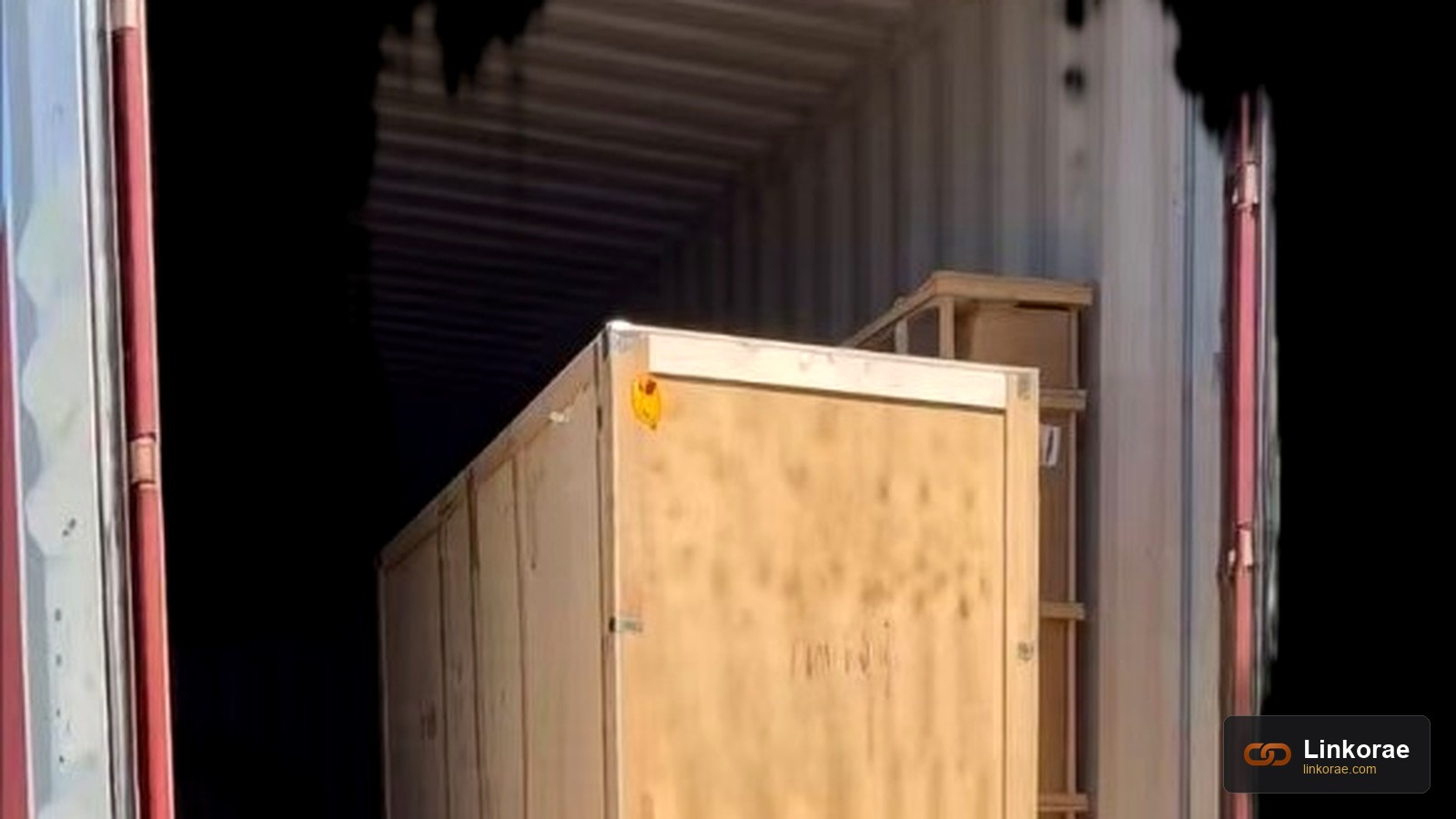
A 53-foot trailer pulls up. Inside is a crate weighing 400 kg or more. The driver is one person with a pallet jack, and a pallet jack only works on a level surface at dock height.
If there is no dock and no forklift, the crate stays on the truck. The driver waits, calls dispatch, and the clock starts running.
Three charges begin accumulating:
| Charge | What triggers it | Typical range |
|---|---|---|
| Liftgate fee | Truck has to be swapped for one with a hydraulic tail lift | Quoted per shipment, arranged in advance |
| Detention | Free waiting time expires (usually 15–30 minutes) | Billed hourly after the free window |
| Redelivery | Truck leaves loaded; a second attempt is scheduled | Full second delivery charge |
None of these are penalties. They are the actual cost of sending a truck and a driver to an address twice.
Who pays? Four scenarios
1. The receiving side wasn’t ready
This covers the large majority of cases:
- Residential address with no forklift and no liftgate ordered in advance
- Commercial warehouse, 3PL, or FBA facility where the delivery appointment wasn’t made, or wasn’t honored
- Nobody on site at the scheduled time
- Not enough room for the truck to maneuver into position
Who pays: the receiving side. Liftgate, detention, and redelivery are billed through at cost.
2. The cargo itself was the problem
Broken or warped pallets. Declared weight or dimensions that don’t match reality. Packaging that has come apart in transit, so a forklift has nothing solid to lift.
Who pays: the shipper. Detention, on-site re-crating or re-strapping, and in the worst case the cost of returning the shipment.
This is why pallet standards matter. If your supplier in China builds a crate to a random spec, it may not survive handling by a US forklift. Ask for pallets that meet North American standards before the cargo ships.
3. The truck showed up wrong
The booking clearly specified a liftgate, and the carrier sent a truck without one. Or the equipment failed on site.
Who pays: the freight forwarder or the trucking company. This is our mistake. We send a correct truck at our own cost and nobody else gets billed.
4. Wrong address or bad appointment data
- The shipper supplied an incorrect address or incomplete details, so the appointment failed → the shipper pays the address correction and redelivery.
- We entered the booking wrong or missed the appointment window → we pay, in full.
The principle is simple: whoever caused the problem pays for it.
The threshold that decides everything
Here is the practical line we use, and it’s worth knowing whichever forwarder you use:
If a single piece weighs 400 kg or more, or any single dimension is 200 cm or more, it is past the point where a driver with a pallet jack can help you.
Below that, a liftgate plus a pallet jack usually gets the crate to the ground. Above it, you need a forklift on your end, or a delivery method built for the weight.
If your shipment crosses that line and you’re delivering to a residence, tell your forwarder before the cargo leaves China. Not after it lands. How that sits inside an oversized DDP number: what’s included, what’s billed later.
What to confirm before you book
- Address type. “Residential” and “commercial” are different service levels with different equipment. A house is not a small warehouse.
- Liftgate — included or extra. It is almost always extra. Get the number in writing as part of the original quote, not as a surprise later.
- Who is unloading. If it’s you, make sure you’ll actually have the equipment and the people on the day. If it’s the driver, get that stated explicitly in the quote.
- Free waiting time. Usually 15–30 minutes. Know what happens at minute 31.
- FBA and 3PL appointments. An oversized shipment arriving at an Amazon facility without a valid appointment will be turned away at the gate. That’s a redelivery charge and a delay, for a problem that took five minutes to prevent. Amazon’s own size tiers: oversize items to FBA from China.
Frequently asked questions
Does the driver have to help me unload?
No. Standard trucking service is curbside delivery at the truck bed. Any assistance beyond that is a paid service arranged in advance.
What is a liftgate?
A hydraulic platform mounted at the rear of the truck. It lowers cargo from the truck bed to ground level. It has a weight limit, so it does not solve every oversized shipment.
Will a liftgate handle my 400 kg crate?
Sometimes. It depends on the specific equipment and the crate’s footprint. This is a question to ask before booking, not on delivery day.
What if my driveway is too narrow for the truck?
The truck can’t deliver, and you’re looking at a redelivery, possibly with a smaller vehicle at additional cost. If your access is tight, say so at quote stage — it changes which truck we send.
Can I just refuse the extra charges?
The charges come from the trucking company for time and equipment actually used. Refusing them doesn’t make them disappear; it delays your cargo while the dispute is resolved.
Does DAP work differently from DDP?
For unloading purposes, no. Neither includes it.
The one-line version
DDP does not mean “we carry it into your garage.” It means duties are paid and the truck reaches your address.
Everything after the trailer doors open is a separate conversation — and the right time to have it is before your cargo leaves the factory, not while a driver is standing in your driveway with the meter running.
Shipping something oversized from China?
Send the dimensions, weight, and delivery ZIP code, and we’ll tell you exactly what equipment the delivery needs and what it costs — before you book. Free, no obligation. Mon–Sat, 08:00–22:00 China time (GMT+8).
Incoterms 2020 and typical US trucking practice. Carrier free time and equipment vary by lane. Current as of September 2026. This is general information, not a quote.