
Furniture sits on Section 301 List 3 at 25% on top of base duty — often the largest cost line after freight. Rate current as of August 2026 — verify before you quote.
Most furniture damage happens in the first and last 50 metres, not on the ocean. A DDP quote gets you to the curb. Not inside, not upstairs, not unpacked. Wooden furniture triggers Lacey Act, ISPM 15, and formaldehyde rules. Door to door runs roughly 30–45 days to the West Coast and 45–60 days to the East Coast. What the DDP quote itself covers: oversized DDP from China — what’s included, what’s billed later.
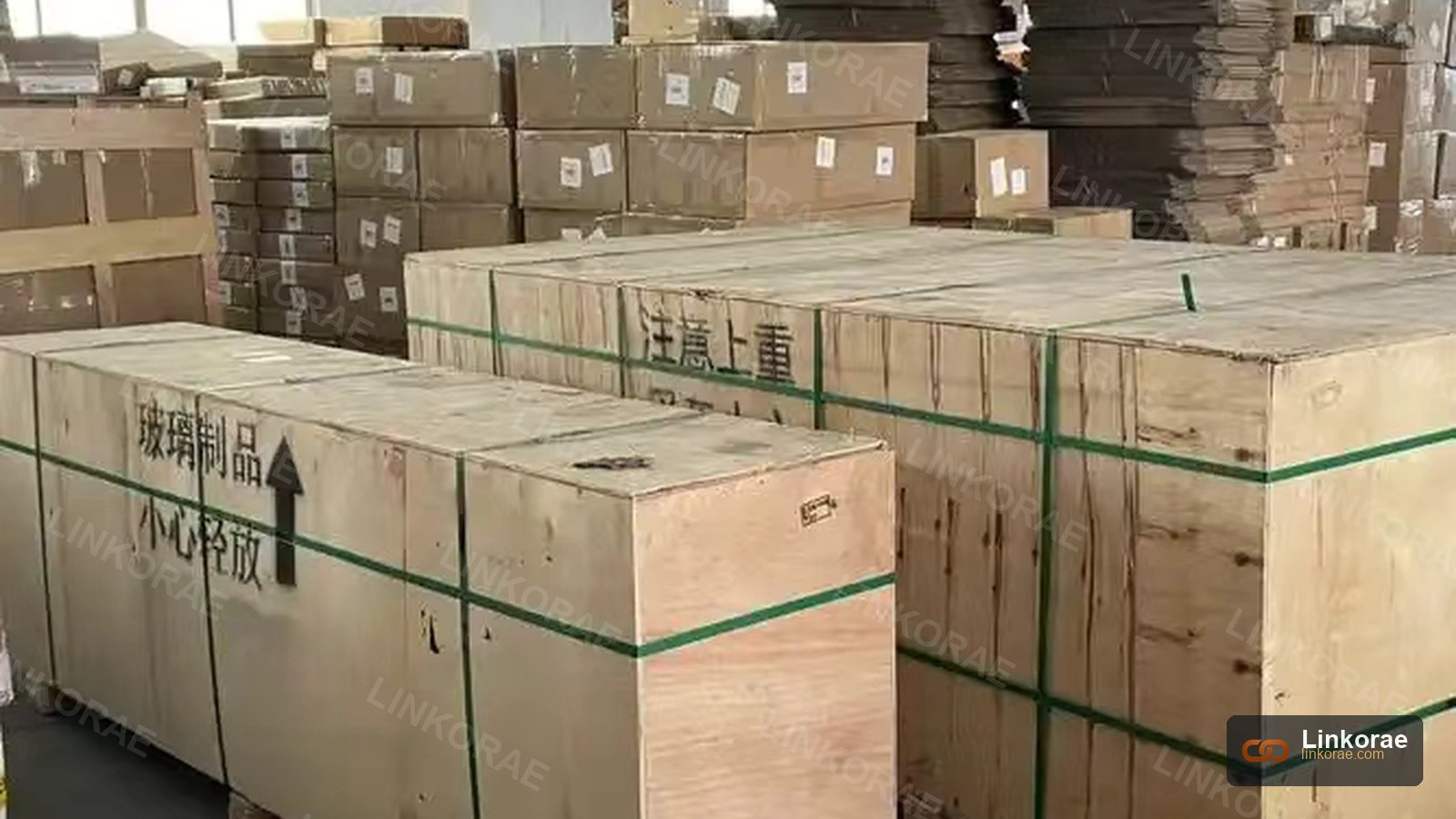
What drives the price
Furniture is bulky and light. That single fact determines almost everything about what you’ll pay.
Ocean freight for a full container is priced per container, not per kilo. So with furniture you’re paying for space, and the question that matters is how well your goods fill a container.
What makes furniture cheap to ship:
- Flat-packed or knock-down construction
- Nesting shapes that stack
- Removable legs and hardware shipped separately
- Consistent carton sizes that tile neatly
What makes it expensive:
- Fully assembled pieces with fixed legs
- Irregular shapes that leave air gaps
- Anything too tall for a 40HQ, which pushes you onto an open top at roughly double the cost
- Single pieces over 400 kg, which change your entire US delivery plan
A worked example of why this matters: a sofa shipped assembled might fit 20 units in a 40HQ. The same sofa knocked down might fit 45. Your freight cost per unit just dropped by more than half — for a design change that costs the factory almost nothing.
If you’re at the product development stage, talk to your freight forwarder before you finalise the design, not after. It’s the cheapest cost reduction available to you and almost nobody uses it. When a piece won’t fit a 40HQ at all: 40HQ, flat rack, or breakbulk — picking by your cargo’s size.
The tariff line most sellers underestimate
Furniture from China falls under Section 301 List 3, which carries a 25% additional duty on top of your normal HTS rate.
That is not the whole picture. US duty on Chinese goods stacks in layers:
| Layer | Typical for furniture |
|---|---|
| Base MFN duty | 0%–7%, depending on the HTS code |
| Section 301 List 3 | 25% |
| Forced-labour duty (from 24 July 2026) | 12.5% |
Rates verified August 2026. US-China tariff policy has changed repeatedly through 2025 and 2026 — confirm current rates before you build a landed-cost model. How a DDP quote prices that stack in: Section 301 and duties on oversized goods — how DDP absorbs them.
On a $30,000 container of furniture, the duty layers alone can exceed $10,000. That’s frequently more than the freight.
Two practical consequences:
- Your HTS classification matters enormously. Furniture codes vary by material, use, and construction. A wooden bedroom cabinet and a metal office cabinet sit in different codes with different base rates. Getting the code wrong doesn’t just risk a penalty — it can mean paying more duty than you need to for years.
- A DDP quote includes duty, which means it’s sensitive to rate changes. Ask any forwarder how long their quoted duty is locked for, and what happens if rates move between booking and arrival. If they don’t have a clear answer, that’s a risk sitting on your side of the table.
Packing: where furniture actually gets damaged
Ocean transit is smoother than most people imagine. Containers don’t get thrown around at sea. What damages furniture is handling — the forklift at the factory, the loading crew, the unloading at the far end.
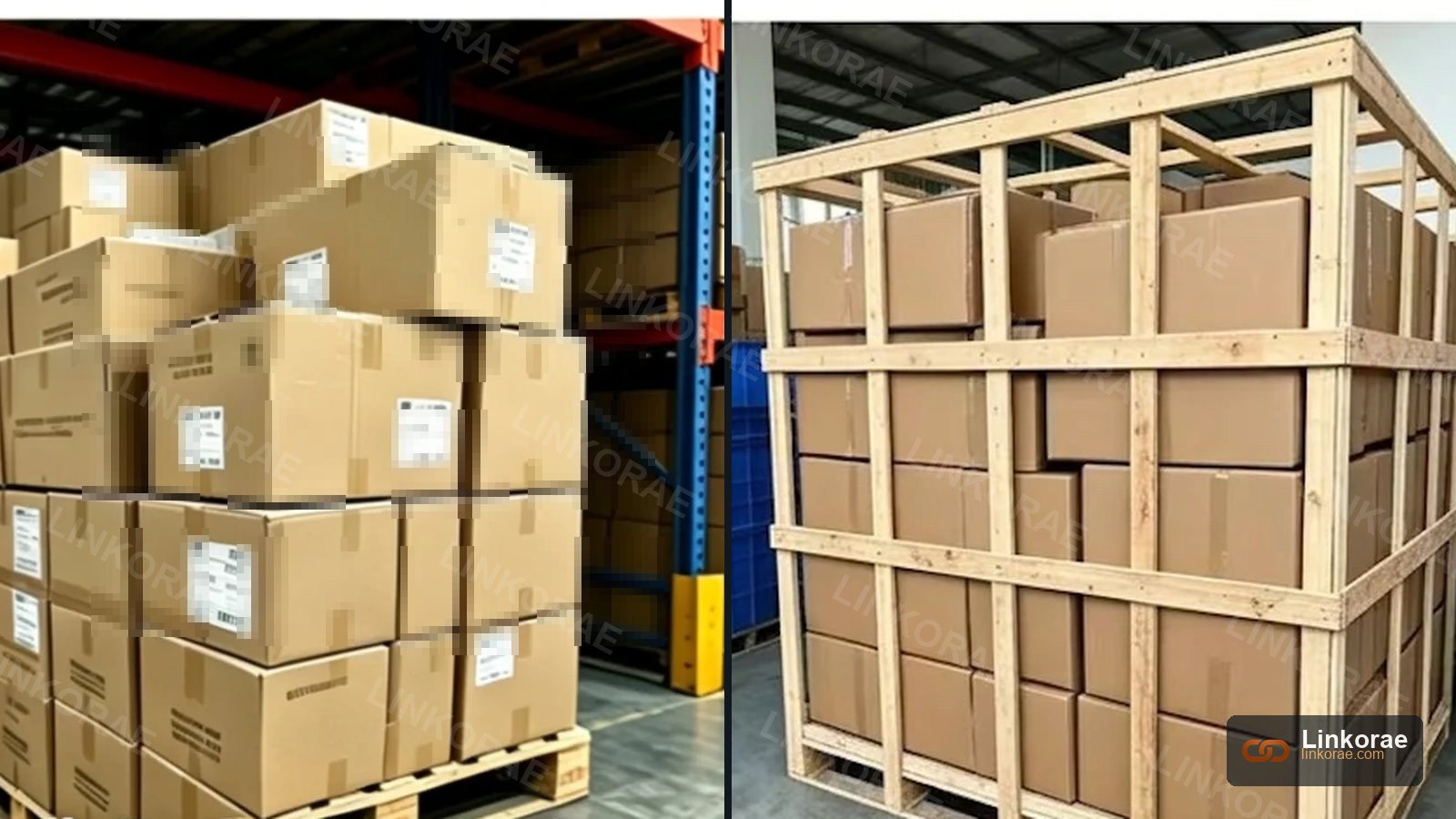
The failure patterns we see most:
- Corners. Almost all visible damage arrives at a corner. Corner boards are cheap. Skipping them is the most expensive saving in the business.
- Compression from stacking. Cartons at the bottom of a stack carry everything above them for six weeks. If the carton isn’t rated for it, the contents deform. Upholstered furniture is especially vulnerable — foam takes a set and doesn’t recover.
- Surface abrasion. Two pieces of finished wood rubbing together for a month leaves marks. Anything with a visible finish needs a barrier layer, not just an outer carton.
- Moisture. Containers sweat. Warm humid air loaded in Guangdong condenses when the ship hits colder water. Solid wood absorbs it, swells, and joints open. Desiccant packs are inexpensive and most factories won’t add them unless you ask.
- Hardware in the same box as the finish. A bag of bolts loose in a carton with a polished tabletop will find that tabletop.
What to actually do: ask your supplier for photos of a packed unit before the first shipment, not a description. And ask for a drop-test video if the item is expensive. Suppliers who pack properly are usually happy to show you. The ones who aren’t tell you something.
Where furniture ships to
Three destinations, three different sets of rules.
Amazon FBA. Strictest requirements. 48 × 40 inch pallets, four-way fork access, nothing overhanging the edge, Team Lift labels on cartons over 50 lb, and a booked appointment. Furniture fails FBA inbound more often than most categories because it’s heavy and awkwardly shaped. Pallet, label and appointment rules: oversize items to Amazon FBA from China.
Your own or a third-party warehouse. Most flexible. You can inspect, repack, relabel, and split shipments. Costs more per unit but removes almost all rejection risk. This is what we recommend for a first shipment with a new supplier.
Direct to the end consumer. The hardest. Residential addresses, no loading dock, and a customer expecting the item brought inside. Curbside delivery of a 90 kg dresser to a suburban house is a bad customer experience. If you’re selling large furniture DTC, budget for inside delivery or white glove service — and price it into your product, because it isn’t cheap.
Delivery
A DDP quote gets your furniture to the curb at the delivery address. The driver will help bring a piece down to ground level only if that piece is under 400 kg and under 2 m on its longest side.
For most furniture, that’s fine. Where it breaks down:
- A large sectional sofa or a commercial-sized table can exceed 2 m
- Marble or stone-topped pieces can exceed 400 kg
- Anything over 2.35 m in width or height and over 1,000 kg moves to a 53-ft trailer, which has no liftgate and no unloading service at all
The full breakdown of thresholds, equipment, and charges: liftgate, residential, no dock. If you’re shipping furniture for the first time, read that one before you book.
Compliance for wooden furniture
Three separate regimes, all of which apply at once:
- Lacey Act. Wood products require a declaration of species and country of harvest. This is a formal filing, and the information has to come from your supplier.
- ISPM 15. Any solid wood packaging — crates, pallets, dunnage — must be heat-treated or fumigated and stamped. This covers the packaging, not the product.
- Formaldehyde. Composite wood panels — MDF, particleboard, plywood — must meet US emission standards, with certification traceable to the panel manufacturer.
Upholstered furniture adds flammability labelling requirements on top.
Full detail: wood furniture from China — Lacey Act, ISPM 15, what CBP checks. The short version for planning purposes: these documents come from your supplier, not from your freight forwarder, and they need to exist before the container loads, not after it arrives.
Timeline
Roughly what to expect, door to door:
| Stage | Typical duration |
|---|---|
| Factory to origin port | 3–7 days |
| Booking and vessel space | 5–10 days lead time |
| Ocean transit to West Coast | 14–20 days |
| Ocean transit to East Coast | 28–35 days |
| Discharge and customs clearance | 3–7 days |
| Port to your door | 5–10 days |
| Total to West Coast | 30–45 days |
| Total to East Coast | 45–60 days |
Industry-typical ranges. Peak season and customs examinations extend these — an examination alone adds 7 to 21 days. Where the variance actually comes from: door-to-door timeline for oversized freight.
The three mistakes we see most
1. Designing the product before talking to freight. A furniture piece 5 cm too tall for a 40HQ costs roughly double to ship, forever. That’s usually a decision made by someone who never saw a container.
2. Assuming DDP means “handled.” DDP covers transport, customs and duty. It does not cover Lacey Act declarations, formaldehyde certificates, or flammability labels. Those come from your supplier and they are your responsibility as importer.
3. Not checking the delivery address until the goods arrive. Whether your destination has a loading dock, a forklift, or a driveway a 53-ft trailer can use determines several hundred to several thousand dollars of cost. It’s free to check in advance and expensive to discover late.
Common questions
How much does it cost to ship furniture from China to the USA on DDP terms?
It depends mostly on how well your furniture fills a container and what HTS code it falls under. Furniture carries a 25% Section 301 duty on top of base duty, which is often a larger line than the freight itself. Send us dimensions, weight and product description for an accurate number.
Is duty included in a DDP furniture quote?
Yes — DDP includes duty and tariffs. Ask how long the duty portion is locked for, since US-China tariff rates have moved several times recently.
What tariff applies to furniture from China?
Furniture sits on Section 301 List 3 at 25%, plus your base HTS rate and any additional duties in force. Verify the current stack before building a landed-cost model — this area changes frequently.
Will my furniture be brought inside the house?
Not under a standard DDP quote. Delivery is to the curb. Inside delivery and white glove service are available and priced separately.
How long does furniture take from China to the US?
Roughly 30–45 days door to door to the West Coast, 45–60 days to the East Coast. A customs examination adds 7 to 21 days.
Can you deliver furniture directly to Amazon FBA?
Yes. Furniture has a higher-than-average FBA rejection rate because of pallet and labelling requirements, so we check pallets and labels in China before the container loads.
What documents do I need for wooden furniture?
A Lacey Act declaration with species and harvest country, ISPM 15 treatment on wood packaging, and formaldehyde certification for composite panels. Upholstered items also need flammability labelling. These come from your supplier.
Get a furniture DDP quote
Send us four things and we’ll come back with a number: carton dimensions and weight, total quantity or container size, your HTS code or product description, and the US delivery address. We’ll also tell you upfront which delivery charges will apply and whether your packing will pass FBA inbound. Free, no obligation. Mon–Sat, 08:00–22:00 China time (GMT+8).
Rates verified August 2026. Sofa 20 vs 45 is an illustrative fill example, not a specific SKU. Industry-typical timelines. This is general information, not a quote.