
Short answer: anywhere from about 16 days to about 58 days — on the same ocean, in the same year, for the same kind of cargo.
That spread is not a rounding error. It’s a 3× difference, and it comes down to two decisions at booking: which US gateway your cargo enters through, and which service level you paid for. Most importers get quoted one number, take it as “how long shipping takes,” and are surprised when the next shipment behaves differently. Door-to-door for oversized cargo, stage by stage: where the weeks actually go.
The two things that set your transit time
1. Which coast
West Coast gateways — Los Angeles, Oakland — are the shortest ocean leg from Asia. Nothing else is close.
East Coast and Gulf gateways — New York, Savannah, Houston, Miami — take substantially longer. The vessel either transits the Panama Canal or the cargo moves inland by rail after a West Coast discharge. Either way, weeks are added.
Chicago and other inland points are not ports. Cargo lands somewhere, then travels overland. Cost is a separate question from time: the cheaper port isn’t always the cheaper shipment.
2. Which service level
On any given lane, carriers sell several tiers:
- Express — dedicated fast strings, priority berthing and discharge. Shortest transit, highest rate.
- Standard — the normal scheduled service on that lane.
- Economy — may transship, wait longer for a berth, or ride a slower rotation. Lowest rate, longest and least predictable transit.
The same gateway can be 25 days on one service and 33 days on another. The ocean didn’t change. The service did.
Realistic transit ranges by gateway
Measured from the day after sailing, to cargo available at destination:
| Gateway | Express | Standard | Economy |
|---|---|---|---|
| Los Angeles | ~16–20 days | ~22–28 days | ~25–33 days |
| Oakland | — | ~25–32 days | — |
| Houston | — | ~34–45 days | — |
| Chicago (inland) | — | ~34–45 days | — |
| Savannah | — | ~34–43 days | — |
| Miami / Tampa | — | ~37–46 days | — |
| New York / New Jersey | — | ~40–45 days | ~45–58 days |
Two things to read carefully:
The low end assumes a clean sailing, no berth congestion, and no customs hold. The high end is what a normal bad week looks like. Any forwarder quoting a single number for ocean freight is quoting the best case.
The clock starts the day after the vessel sails. It does not include getting cargo from the factory to the port, waiting for the booked sailing, or final delivery from the destination terminal to your door. Ask which of these are inside the quoted number — the gap between “port to port” and “door to door” is often two weeks.
Why East Coast delivery isn’t just “a bit slower”
A common mistake: an importer in New Jersey compares a West Coast quote against an East Coast quote, sees a small price difference, and picks on price.
The transit difference between LA express and New York economy is roughly 16 days versus 58 days. That’s not slower. That’s a different business decision — different inventory carrying cost, different cash cycle, different risk of missing a season.
If your cargo is going to the East Coast and you need it fast, the honest options are:
- Ship to a West Coast gateway and move it inland by truck or rail
- Pay for an express ocean service where one exists
- Move it by air — price the wait, not the rate
Not: “book East Coast economy and hope.”
How the price is actually calculated
Ocean freight for oversized and heavy cargo is usually priced per kilogram, but not on the weight you’d get from a bathroom scale.
Volumetric weight
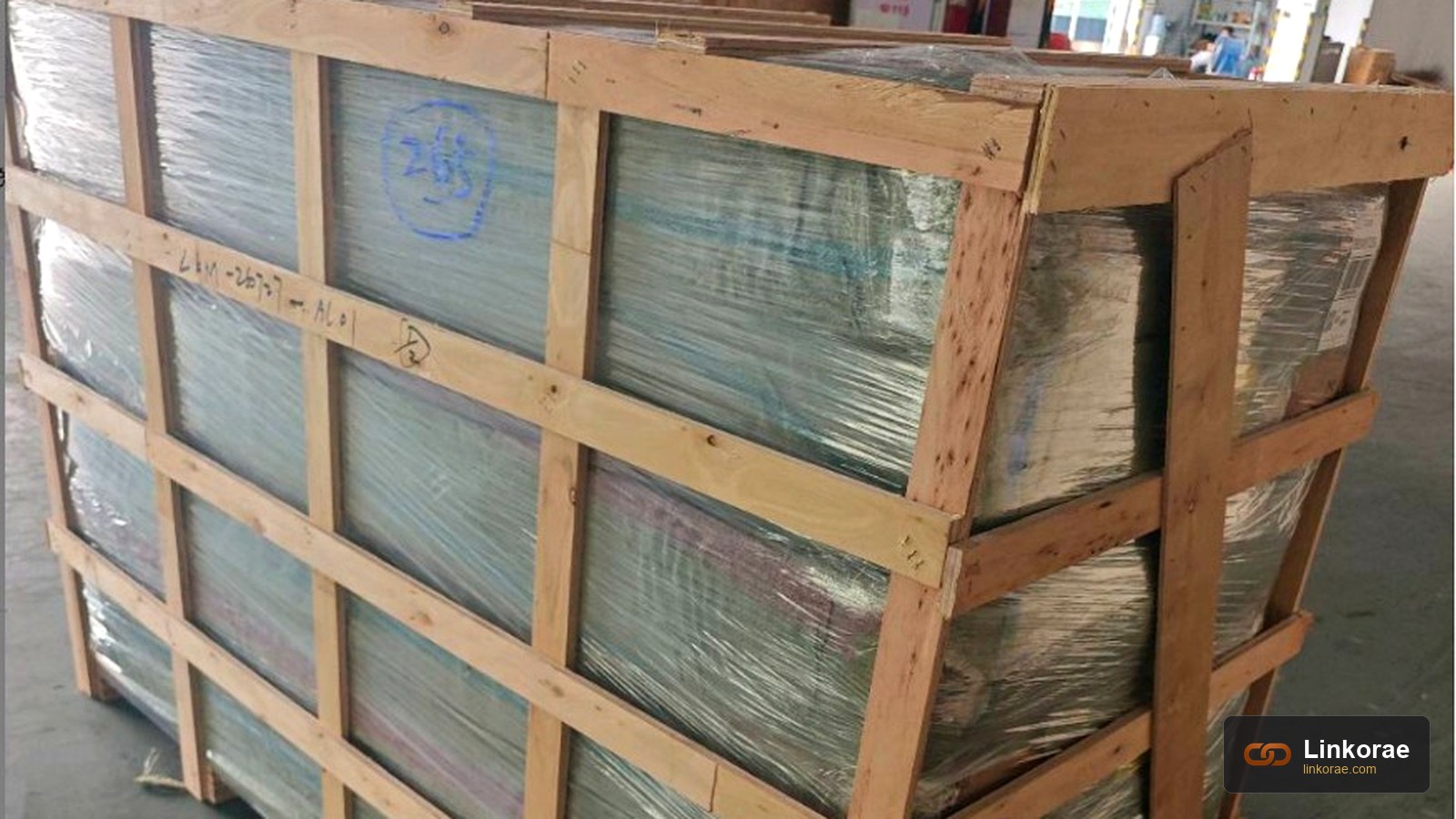
A 400 kg machine in a tight crate ships on its actual weight. The same 400 kg machine in an oversized crate with lots of empty space inside may bill at 700 kg. Packaging is not just a protection question, it’s a pricing question.
This is worth checking before your supplier builds the crate. Ask for the finished external dimensions, not the machine’s dimensions.
Weight breaks
Rates step down at thresholds. A typical structure:
101 kg+ · 151 kg+ · 301 kg+ · 501 kg+ · 1,001 kg+ · 2,001 kg+ · 3,001 kg+
Each bracket has a lower per-kilo rate than the one below it. The practical consequence: a shipment just under a break can cost more in total than one just over it. At 290 kg you pay the 151+ rate on 290 kg. At 310 kg you pay the 301+ rate on 310 kg — and depending on the gap between brackets, the heavier shipment can genuinely cost less.
If you have two shipments coming in the same month and either is near a break, ask whether consolidating them into one crosses a threshold. Sometimes it does, and the saving is real. Why the final bill moves after a quote: chargeable weight and re-measure.
What’s usually separate
Local delivery from the destination terminal is typically a separate line item, not included in the per-kilo rate. So is liftgate service, residential surcharge, and detention. Ask for the all-in number, not the ocean rate. What sits outside most quotes: what DDP actually includes.
Frequently asked questions
Why does my forwarder quote 25 days and the shipment takes 32?
Because 25 was the low end of a range, quoted as if it were a commitment. Ask for the range, and ask what the number includes.
Is the fastest option always worth it?
Only if the time is worth money to you. If your goods sit in a warehouse for two months after arrival, paying an express premium to save ten days at sea is money burned. If you’re restocking a bestseller, ten days can be the whole margin.
Does the transit time include US customs clearance?
Usually not, and clearance duration is not fully predictable. A clean entry can clear in a day. An exam adds a week or more, and exam selection is not something any forwarder controls.
Can I mix modes?
Yes, and for urgent partial shipments it’s often the right answer — air freight the pieces you need now, ocean freight the rest. Ask about splitting rather than treating it as one all-or-nothing decision.
Why is inland delivery to Chicago quoted like a port?
Because for pricing purposes it functions as one. Cargo discharges at a coastal terminal and moves by rail to an inland ramp. The transit number reflects both legs.
What to ask before you book
- Which gateway, and why that one? If it’s not the closest to you, ask what you’re gaining.
- What’s the range, not the number? Best case and normal case.
- What does the clock include? Port to port, or door to door.
- What’s my chargeable weight? Actual or volumetric — and what are the crate’s external dimensions.
- Am I near a weight break? It’s a free question with a sometimes-large answer.
- What’s not in this rate? Delivery, liftgate, residential surcharge, customs exam costs.
Not sure which gateway makes sense for your ZIP?
Send the destination ZIP, crate dimensions and weight, and how fast you actually need it. We’ll come back with the realistic range for each option, so you can see the time-versus-cost trade-off before you commit. Free, no obligation. Mon–Sat, 08:00–22:00 China time (GMT+8).
Transit ranges above are indicative and based on typical scheduled services. Actual times vary with sailing schedule, port congestion, customs processing and inland conditions. Specific transit commitments for any shipment are as stated in your booking confirmation. Current as of September 2026.